
Financial Lifeline for Brodnica Hospital: Councilors to Decide on the Future of the Facility Amidst Controversy Over Bonuses
During the upcoming session of the Brodnica County Council, councilors will decide on granting a long-term loan to the Healthcare Complex. Although official documents speak of development and investments, questions about expenditure transparency resurface among residents and patients, especially in the context of widely publicized financial bonuses for the management staff in the region.
Loans for Hospitals: A National Reality or Local Specificity?
The decision of the Brodnica County authorities aligns with a broader, nationwide trend. Local governments, as managing bodies for district hospitals, regularly face the necessity of financially supporting their subordinate units. Public medical facilities across Poland contend with rising operating costs, salary increases for medical personnel, and the underestimation of procedures by the National Health Fund.
It is worth noting, however, that a loan from the budget of a local government unit (JST) to an independent public healthcare facility (SPZOZ) does not always signify a crisis or an attempt to “save it from liquidation.” District hospitals actively seek external funds – including from the National Recovery Plan (KPO) and EU programs. These investments are carried out on a reimbursement basis: the facility must first pay invoices from its own funds, and only then receives a refund of the subsidy. In such situations, it is the county that secures the hospital's financial liquidity, protecting it from incurring high-interest loans from commercial banks or parabanking institutions.
Brodnica Healthcare Complex Focuses on Modernization, But Patients Question the Costs
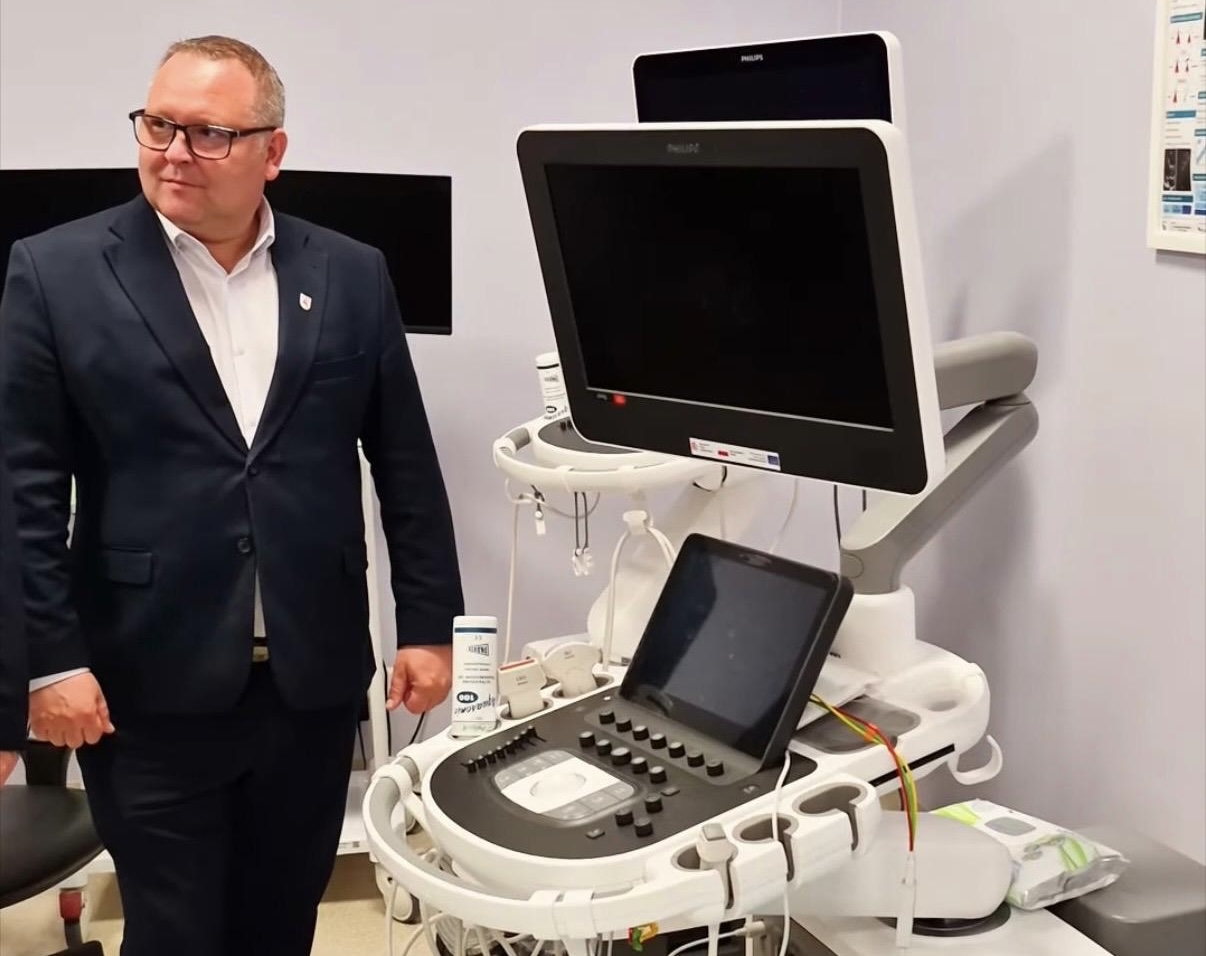
The recent actions and purchases of the Healthcare Complex in Brodnica demonstrate that it is not stagnant. The hospital successfully acquires funds for modernizing its diagnostic base. Recently, the facility has been equipped with modern premium-class ultrasound machines with echocardiography capabilities. Simultaneously, the hospital plans to expand its infrastructure – a new building housing, among other things, a modern sterilization unit is to be constructed on the hospital grounds. However, from the perspective of a patient waiting in lines for specialists or struggling with conditions in wards, announcements about the necessity of public money loans for the hospital evoke entirely different emotions. In discussions among Brodnica residents, the topic of annual bonuses awarded to the management by the County Board regularly resurfaces. When we hear that the hospital needs a loan, and at the same time, asset declarations show that money for high annual bonuses for the director was always available in the budget, we feel a huge moral dissonance. The current management, under the leadership of Kamil Szulc (since mid-2024), defends itself with hard data – according to communications from the Hospital Social Council, the facility closed the previous year with a surplus, generating over half a million zlotys in positive financial results (exactly PLN 538,357.30 for 2025). According to Polish law, a positive financial result is a formal green light that allows the local government to legally pay an annual bonus to a healthcare manager.
Responsibility for Public Funds and Residents' Expectations
Granting a loan from county funds places enormous responsibility on the councilors and the County Board. These funds come from residents' taxes, which is why every such decision requires a thorough analysis of the recovery plan and the hospital's ability to repay the obligation. From a legal standpoint, for the loan to take effect, it is essential to precisely define its framework in the county's budget resolution and secure the source of financing (e.g., from a budget surplus). The session scheduled for September 29 will provide an answer to the question of the terms and amount of support that will go to the Brodnica medical facility. County residents undoubtedly hope that the developed solution will not only secure the local government's finances but, above all, guarantee uninterrupted access to high-quality medical care in the region.